The resignation request by the head of the Investigating Directorate Against Corruption has exposed a deeper problem at the heart of South Africa's prosecuting authority. The Prosecutions Project argues that opaque, executive-controlled appointment processes undermine public confidence and is calling for urgent legislative reform to ensure transparent, independent and merit-based appointments to the National Prosecuting Authority's senior leadership.
Jean Redpath | Four priorities in 24 months for new NPA boss Andy Mothibi
This article was first published on 6 February 2026 on News24.
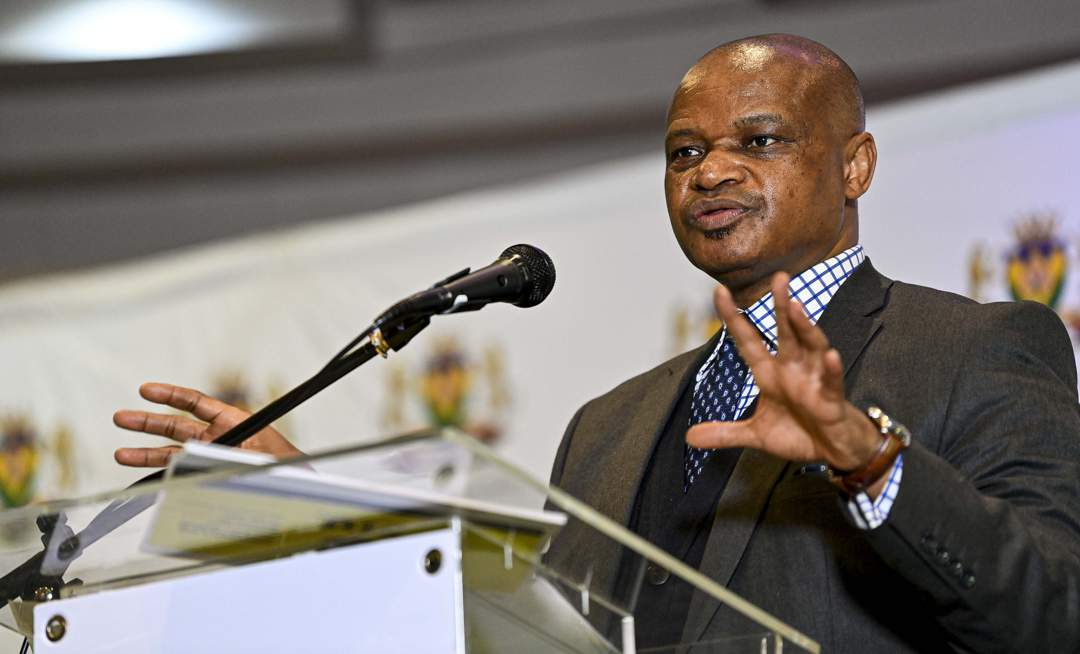
Image credit: Gallo Images | Mlungisi Louw
Jean Redpath reflects on four game-changing goals new NDPP Andy Mothibi could focus on to transform the country’s prosecuting authority.
If it is correct that newly appointed Andy Mothibi is already 63, he has – at most – 24 months as National Director of Public Prosecutions (NDPP) of the National Prosecuting Authority (NPA). On the face of it, this severely limits what is achievable during his term. But four goals that could have an outsized impact may be achievable.
First, falling early within his term, is the next Financial Action Task Force (FATF) evaluation, which will determine whether South Africa stays off the grey list or not. Greylisting results in reduced foreign investment, increased borrowing costs, and reduced capital inflows. It imposes higher compliance costs on financial institutions, restricts international transaction capabilities, and hinders growth. It is to be avoided at all costs.
A moving target
The greylisting of South Africa in February 2023 was a wake-up call, and only a dedicated team led by Treasury resulted in the country being removed in October last year. But staying off the grey list is a moving target, and South Africa will be evaluated again in late 2026 in terms of various “Immediate Outcomes” (IOs). “IO7” includes proactive investigation, which requires evidence of moving beyond reactive investigations to identify money-laundering networks actively, and prosecution and sanctioning, which require evidence that money-laundering cases are both prosecuted and that penalties are “dissuasive and proportional”.
READ | SA exits another ‘grey list’ — but challenges remain, Treasury says
While some prosecutions have been instituted, sufficient convictions with appropriate sentences have been lacking, and this latter aspect assumes more prominence in this round of evaluation. While new enrolments should not be neglected, the focus must lie with ensuring cases already enrolled are concluded expeditiously and appropriately in time for the evaluation. To this end, the NDPP should urgently require a report from all the Directors of Public Prosecutions (DPPs) and the head of the NPA’s Investigating Directorate Against Corruption (IDAC) on money-laundering charges on their court rolls to ensure steps are being taken to ensure these are efficiently and effectively resolved.
For long-term impact, the NDPP should develop clear policies, directives, and guidelines – including pro forma charge sheets – to assist all prosecutors in bringing money-laundering charges.
Second, high-profile corruption. Money laundering goes hand in hand with corruption and other financial crimes, although there is a cynical view that many corrupt actors do not bother to launder funds because their likelihood of being caught and prosecuted is so low. In addressing corruption, the new NDPP benefits from IDAC (responsible for investigations and prosecutions arising from the Zondo and other commissions) already having permanent status (since August 2024) and a more reasonable staff complement of 122, up from an initial 35.
Before IDAC, the NPA had no investigative capacity and relied on the SAPS and the Hawks within the SAPS. The latter is in disarray, and very few corruption investigations are being processed.
Assessment of skills
However, there are still 90 posts vacant in IDAC, and the NDPP should consider initiating a section 38 process (which must go via the minister) to obtain the necessary skills on a temporary basis if permanent appointments are not possible or insufficiently skilled, so that IDAC can move forward more speedily. This will require a dispassionate assessment of available skills.
Indeed, at least nine high-profile IDAC matters are already enrolled, and all efforts to ensure these go to trial as soon as possible should be made. Some of the initial setbacks in these matters have been overturned, such as the s174 discharge by an acting judge on Public Finance Management Act and money-laundering charges of accused persons, including Gupta associate Iqbal Sharma, in the Nulane matter, with the Supreme Court of Appeal ruling there were multiple errors in the judgment and that the accused may be re-tried before another judge. For this appeal, the NPA hired Senior Counsel.
READ | ‘This case was not a comedy of errors’ – IDAC head on SCA’s vindication of Nulane trial
Similarly, no fewer than five Senior Counsel combined appeared on behalf of the DPP Johannesburg and the NDPP in the Cholata extradition matter in the Constitutional Court, with the court finding – to some relief of the NPA – that while the NPA may draft an extradition request, it must be the minister who makes such a request, and the fact that the NPA erroneously made such a request does not on its own deprive a court of exercising its jurisdiction over an extradited person. (Moroadi Cholata is implicated with Ace Magashule in the asbestos eradication matter.)
Hire the best
If it requires hiring big guns like these to get a high-profile, precedent-setting IDAC conviction, the NDPP should do it. This was the approach followed by the erstwhile Scorpions in setting precedent for asset forfeiture – swallow your NPA pride and hire the best for the wins. Achieving even one such conviction during his term would be game-changing.
Third, to have an impact that outlasts his term, the NDPP should turn his attention to the NPA’s policy and directives. These have not enjoyed a thorough overhaul since 2014. In comparison to other jurisdictions, South Africa’s directives are sparse and vague. Prosecutors need much more guidance – and failure to adhere to directives empowers the NDPP constitutionally to intervene, making them an important tool of accountability and performance. This falls squarely in the NDPP’s constitutional mandate, although he will likely need the assistance of a technically excellent litigator as Deputy NDPP – still to be appointed by the President – to do this.
Set up to fail
Finally, the NDPP should use whatever influence he has to persuade the Minister of Justice to table legislative amendments so that the NPA can act “without fear, favour or prejudice”.
In many respects, the legislation, as it currently stands, sets up the NPA to fail. The top 14 NPA positions are all hired and fired by the president, and many of the current crop were appointed by previous presidents.
The DPPs and DNDPPs serve indeterminate terms to 65 depending on how old they were at appointment – they need a fixed term.
Furthermore, the age limit of 65 is too young a limit for legal minds – judges serve to 70 – especially for an NDPP; the age limit must go. The NPA has little control over its own budget, and no clear budget for external skills – this has to be requested from Justice; until the former director-general was suspended, this was reportedly a real impediment.
In addition, prosecutors are not required to be lawyers and are not qualified in a way which is equivalent to attorneys and advocates, affecting both their skills and independence. Finally, salary scales are anomalous, affecting recruitment and morale.
These are a few of the legislative fixes that could elevate the NPA, and if this process is begun by the end of his term, this could have a far-reaching impact.
With 24 months, in fact, much could be done.
– Jean Redpath is a senior researcher at the Dullah Omar Institute at the University of the Western Cape.
Related Posts