The resignation request by the head of the Investigating Directorate Against Corruption has exposed a deeper problem at the heart of South Africa's prosecuting authority. The Prosecutions Project argues that opaque, executive-controlled appointment processes undermine public confidence and is calling for urgent legislative reform to ensure transparent, independent and merit-based appointments to the National Prosecuting Authority's senior leadership.
Mothibi and reform of the NPA
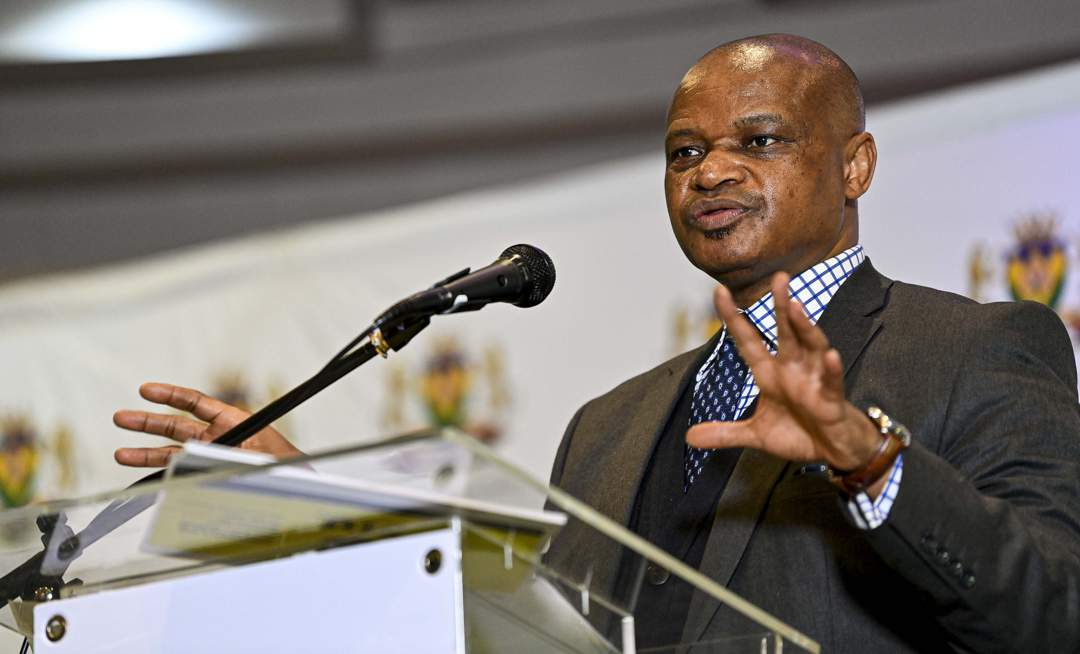
Image credit: Gallo Images | Mlungisi Louw
New NDPP Andy Mothibi’s first press conference and associated SABC appearance on Thursday put into sharp relief the challenges he is facing. Top among these is the denial that there is anything wrong with the performance of the NPA, which seems to have arisen as a result of his consultations with the NPA mandarins. One can only hope that with time his Batohi-esque praise of “conviction rates” will with time, revert to sober reflection of reality.
On SABC, Mothibi said that “anybody reading the Annual Reports would not doubt that NPA is doing well”. Admittedly it is true that it is easy to be misled by one or two reports sprouting the mantra of “94 percent conviction rate”. But when one has been reading them for 20 or more years, stark reality emerges. Over this time period, the total number of convictions of serious crime has more than halved. The number of people sentenced to a term of imprisonment is a fifth of what it was. Convictions from the Specialised Commercial Crime Unit of the NPA have almost decimated – they are 15 percent of what they were 20 years ago, despite commercial crime soaring. All of this while the number of prosecutors doubled.
Conviction rates are like matric pass rates. They don’t take account of the kids who drop out and don’t write matric. The NPA is like a soccer team that only plays matches in the “B” league, and boasts of winning almost every match, but when forced to play an “A” league match is shown up. To the person in the street, conviction rate sounds like the rate of conviction of crimes reported – or perhaps of those cases enrolled in court. But sadly it is neither. Such measures are called “throughput”. Conviction rates, NPA-style, are calculated only on verdicts – guilty verdicts expressed as a percentage of verdicts i.e. cases that end in a verdict.
Yes, the NPA does very well with most cases they choose to prosecute. But, this is often after excessive delays, and the choice not to prosecute at all – to not enrol, or to withdraw – is made far too readily. Yes, it is true that the deterioration in SAPS affects their work. Yes, it is true that there is perhaps more appropriate focus on more serious crime. But the numbers still do not add up to what is needed to address the crime and corruption scourge faced by South Africa, and the failures in big cases are obvious to any South African.
The problems in the NPA are not the fault of individual prosecutors, many of whom continue to do excellent work in a difficult environment. Specialist sexual offences prosecutors in particular show relatively good throughput and willingness to take on difficult matters. That this comes with a lower conviction rate, is as to be expected. It is high time that the NPA dispense with the conviction rate as the primary measure of its performance. The perverse incentives are obvious.
In addition to dispensing with conviction rates, there is a need to amend the NPA Act. This is because the problems with the NPA, hidden behind conviction rates, are structural and rooted in the legislation which created the NPA, i.e. the NPA Act.
First up in need of reform, is senior appointments. It is a well-documented and agreed problem, from the Zondo Commission to just about every NGO speaking on the topic, that these are not transparent, competitive, merit-based and seem entirely dependent on the whim of politicians like the Minister and the President (albeit the NDPP makes recommendations).
Mothibi talked about moving quickly to fill the vacancies at the level of Deputy National Director (DNDPP) and Director of Public Prosecution (DPP) level. Indeed, recently the DPP for Mpumalanga was appointed by the President. The problem is, there appears to have been no transparent, open, merit-based interview process for this appointment and the President simply appointed him. The NPA Act allows this.
Second, is the problem of the term of office. All those at this senior level do not serve a fixed term and will serve until age 65, while the NDPP serves 10 years or to age 65, whichever comes sooner. So Mothibi might leave in two years due to age, but the appointments he recommends, will be in the NPA long after he has left. A young DNDPP or DPP could serve decades if appointed. Quickly filling the many vacancies with people who are not truly the best available and without proper process, might set the NPA up for more decades of mediocrity. At the same time, we exclude some potentially excellent candidates by reason of age only. The 65 age limit should go.
Third, getting rid of poor appointments even if they are seriously compromised is exceedingly difficult. Mothibi was asked about the Nkabinde Inquiry into the fitness of DPP Andrew Chauke to hold office. He deflected. If Chauke manages to escape a finding against him, he will continue in office after already serving 14 years as head of a Division which has shown amongst the worst throughput trends in the NPA. The Inquiry lays bare the laborious process and difficulty of removing a DPP. Again, this is prescribed in the NPA Act.
Fourth, the financial and organisational independence of the NPA is a desperate need, and indeed one bright moment was Mothibi’s seeming certainty that an amendment to the NPA Act would be tabled in Parliament to achieve this reform that civil society and others– most notably, former NDPP Batohi – have been calling for. He has the advantage of a pro-active Minister, Mmamoloko Kubayi, who prides herself on getting things done – and who has suspended the Director-General who was widely thought to be stalling such reforms.
Mothibi appears to hold out the hope the amendments will also allow him to set salaries, to make the NPA more attractive as a career, and to garner the missing skills by filling the 17 percent vacancy rate. Indeed the debacle around salaries in the NPA has been ongoing and even saw senior prosecutors take government to court – not an ideal situation. But salaries alone won’t fix the skills problem, if the NPA is not a professional, dynamic institution attractive to the brightest and the best.
That is a long-term project. At present, prosecutors remain outside of the legal profession – they need only an LLB, not a professional qualification. This means that there is little cross-pollination between the legal profession and the prosecution service, as there is in other countries, where a stint of excellence in the prosecution service may set one up for private practice – or a career of excellence in private practice is rounded off with service for a limited term as a DPP. In the short term, a budget and the power directly to hire outside, ad hoc skills – which also requires NPA Act amendment – is needed.
If the Minister delivers and brings an NPA Amendment Act, there will be an opportunity to address all of this. But that will require political will of a majority in Parliament. That in turn will require the recognition that the NPA is the cornerstone of accountability in our democracy. Without it, the whole edifice crumbles.
Related Posts